Camping the Dark Dunes
BackFor many years, the location at Jan Verfailleweg 616 in Den Helder represented a specific type of accommodation: Camping de Donkere Duinen. Classified as a campsite, this establishment offered a unique stay close to Den Helder's natural surroundings. Although its primary function was that of a traditional camping site, it is crucial for potential guests to understand the context of this specific accommodation, as significant changes are planned or have already taken place.
The Historical Value of the Residence
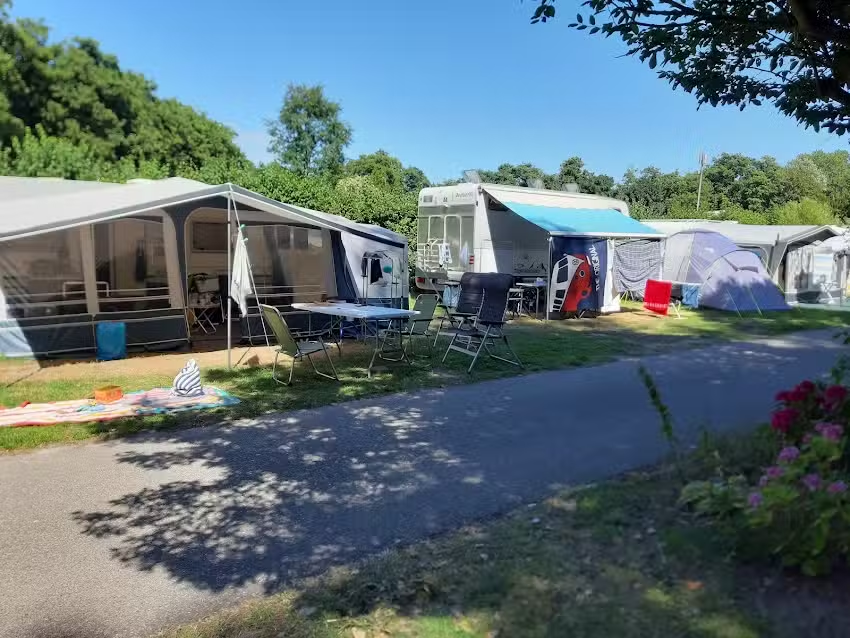
Camping de Donkere Duinen is situated on a site of approximately 5.5 hectares, strategically located on the edge of the nature reserve of the same name, known for its forest of Corsican pines. This location offered a distinct advantage over many other types of accommodation: natural shelter from the wind, a common phenomenon in the coastal region of North Holland. This shelter, according to previous visitors, made it a relatively quiet place to pitch a tent or park a caravan, unlike open fields where the wind has free rein.
The layout of the site itself contributed to a sense of privacy and tranquility. The pitches, which ranged in size from 90 to 120 square meters, were demarcated by wide hedges and rows of trees. This created a setting more reminiscent of a small, simple retreat than a vast open space, which explains the high appreciation for the tranquility of the location. Furthermore, the campsite had five service buildings. The quality of these basic facilities was positively perceived by some guests, with specific mention of clean sanitary facilities and the availability of ample free hot water – an important detail for campers accustomed to extra charges for hot water.
The geographical location also offered excellent access to local amenities. The sandy beach, an essential part of a coastal holiday, was about 800 meters away. Guests also didn't have to travel far for daily necessities; a shopping center and supermarkets were just 400 meters away. This proximity to both nature and commercial centers made it a surprisingly well-equipped base for those seeking a more independent hospedaje than, for example, a traditional hotel or resort might offer.
Facilities and Accessibility
The basic camping facilities were in good order. The sites were equipped with water and drainage hookups, which enhanced the convenience of a modern camping experience. Another positive point, highlighting the overall accessibility, was the confirmation that the site entrance was wheelchair accessible, an important aspect for a wide range of people seeking accommodation.
The Dark Sides of the Stay
Despite the natural charm and basic amenities, there were demonstrable drawbacks to staying at Camping de Donkere Duinen. A recurring point of criticism concerned the nearby Jan Verfailleweg. Visitors reported that people drove fast on this paved road, resulting in noise pollution from speed and exhaust fumes. According to some, this phenomenon detracted from the intended tranquility that the wooded surroundings were supposed to offer.
For families with young children, the entertainment options were limited. It was specifically noted that there was no play equipment for children. This places the campsite in a niche market, geared more towards adults or older children who prefer peace and quiet and nature over the organized children's activities often found at full-fledged resorts or holiday parks with huts .
The technological infrastructure also had its limitations. Although Wi-Fi was available, it was perceived as limited. In an era where connectivity is becoming increasingly important, this can be a drawback for guests who rely on a stable internet connection for work or entertainment, unlike the connectivity typically expected in modern apartments or hotels.
The Philosophical Dilemmas
The most significant criticism arose from recent developments surrounding the property. A very passionate review expressed deep disappointment about the sale of the site and the associated change in philosophy. The reviewer feared that the authentic, human atmosphere of the campsite, which contrasted with the "mass" and focused on guests who were "complete and whole people," would disappear in favor of commercial gain. This highlights a tension between traditional, more fundamentally simple accommodations and the modern drive for profit maximization.
The Transformation: From Camping to Luxury Villas
At the heart of the current situation is the announced transformation. The site, which previously primarily served as a tent and caravan site, with the possible addition of a small number of rental accommodations, has been sold to a developer. The plan, which requires a zoning amendment, involves the development of a high-end recreation park. This park is expected to house 36 luxury holiday homes, known as villas . This marks a shift from the basic needs of a campsite to a more luxurious form of accommodation , more in keeping with the concept of a resort, although the new units resemble luxury holiday homes more than traditional apartments.
This planned development implies that the traditional camping pitches, the true hospedaje for tents and caravans, may have disappeared or are about to disappear, validating previous reports of closure and a shift towards a "holiday home playground." For potential guests specifically looking for a place to pitch a tent, the situation is therefore precarious. The focus is now clearly on a higher price point and a more exclusive stay.
The discussion surrounding the transformation touches on the broader issue of accommodation in the Netherlands. While some travelers seek the simplicity and low cost of lodging or simple accommodation , the new development targets a market that demands more comfort, exclusivity, and high-quality amenities, comparable to what one would expect in a luxury resort or a spacious villa . It's a classic example of the evolution in the recreation sector, where demand for rooms in the form of fixed, luxury units is eclipsing traditional tent sites.
The size of the former campsite (approximately 5.5 hectares) is being transformed to accommodate these 36 luxury units, indicating a lower density of accommodation units per square meter than a traditional resort, but a significantly higher level of luxury per unit than the former camping sites. The municipality has cooperated, provided conditions are met that guarantee the connection between the urban area and the dune area, suggesting that the repurposing is an official and long-term process, not merely a temporary interruption of camping activities.
To put this article into perspective with other accommodation options: the former campsite offered an alternative to the nearby hotels or more isolated huts in other regions. The new plans suggest the developer wants to maintain the exclusivity and natural setting, but package it into a product that competes with the high-end holiday villa market. This is a fundamentally different proposition than the simple accommodations the campsite once offered. Guests looking for a quick overnight stay or basic lodging will likely have to avoid this location in favor of other, more traditional alojamiento (alojamiento ) options in the region.
The proximity of the A7 motorway was mentioned in the context of the location, albeit in the negative sense of noise pollution at the campsite itself. The general accessibility of Den Helder is good, but the specific atmosphere of the Donkere Duinen was always rooted in the feeling of escape in the woods, an atmosphere that is now being redefined. The question is whether the new luxury holiday homes can convey that same intrinsic value, or whether they will simply become an expensive base, more resembling a resort without the broad accessibility of the old campsite. Even if the new development were to expand with apartments or larger villas, the soul of the quiet, wooded campsite, once a beacon in Den Helder, would likely be forever changed. The emphasis on a 'high-quality recreation park' confirms this. The old accommodation was there for the 'people,' the new one focuses on the 'market.'
In summary: the information points to a transitional phase, or an already completed transition, from a traditional campsite with spacious pitches and functional sanitary facilities to a park with 36 luxury villas. The past offered a peaceful, secluded stay with good basic amenities. The future promises a more exclusive hospedaje, more in line with a luxury resort concept, where traditional campers looking for simple lodging or accommodation will have to look elsewhere. However, the proximity of the sea and the forest remains a constant, whether pitching a tent or staying in one of the new holiday homes.