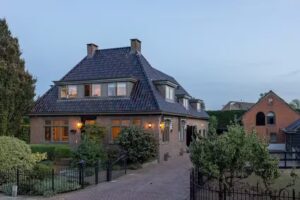
Daisy Apartment
BackWhen researching a stay in Amsterdam, a city known for its cramped yet charming accommodations , potential guests often face a choice: the standardized service of a hotel or the independence of an apartment. The Daisy Apartment, located at Plantage Muidergracht 35A, clearly positions itself in the latter category. With an aggregate rating approaching a solid 4.4, this accommodation offers a unique glimpse into what one can expect from a self-contained rental in one of the city's more culturally rich neighborhoods. This article analyzes the strengths and weaknesses of this particular hospedaje, based solely on available information and contextual research.
The Unique Positioning of the Daisy Apartment
The Daisy Apartment isn't a traditional hotel or a large-scale resort. It's an apartment, which immediately implies that guests are more self-reliant. For travelers seeking longer-term accommodations, or who prefer cooking to daily restaurant visits, this type of accommodation offers inherent advantages. It's an alternative to the compact rooms often found in centrally located hotels and is conceptually distinct from a hostel, where privacy and shared facilities are the norm. While villas are often larger, the Daisy Apartment offers the intimacy of a private home.
The Undisputed Asset: A Superior Location
The most consistently positive aspect of the Daisy Apartment is undoubtedly its location. Situated on Plantage Muidergracht, this accommodation is located in the Plantagebuurt neighborhood, an area that historically served as a green oasis and is still home to important cultural institutions. Guests appreciate that the city center is only a ten to twenty-minute walk away. This proximity to the lively city center, without being directly in the tourist crowds, is often praised as the ideal balance for a peaceful night's sleep.
The immediate area is particularly attractive for culturally inclined visitors. Its proximity to the Hortus Botanicus and Artis Zoo, sometimes just a two-minute walk away, makes it an excellent base for those wishing to experience the city's flora and fauna. Furthermore, Plantage Muidergracht shares its surroundings with parts of the University of Amsterdam, suggesting a neighborhood that, while central, retains a certain tranquility and academic atmosphere, unlike the more commercial areas. For guests planning a stay where both culture and convenience are important, this location scores highly. The option of booking rooms in an area historically considered a pleasure garden offers a more enriching backdrop than standard apartments in less characteristic neighborhoods.
Accessibility is further enhanced by the proximity of supermarkets (Albert Heijn), shops, and a pharmacy, which is essential for the self-contained nature of apartment accommodation. This convenience reduces reliance on the hotel reception for daily needs, a benefit rarely found in traditional lodgings or smaller guesthouse-style establishments.
The Internal Experience: Layout and Comfort of the Apartments
The Daisy Apartment appears to consist primarily of duplex-style apartments , which entails a specific living structure. The bedroom is located upstairs, while the shower facilities are on the ground floor. This vertical design can be both a plus and a minus. The positive side is the clear separation between the sleeping and living areas, which contributes to the feeling of a full-fledged apartment or holiday apartment , rather than a simple studio.
The double bed is specifically described as very large and comfortable, which is crucial for the quality of the stay . The kitchen facilities, including a dishwasher and induction cooktop, are also a strong point, as these modern conveniences aren't always standard in small-scale accommodations . This underscores the Daisy Apartment's suitability for guests seeking a "home-from-home" feel, something many hotels can't offer.
Critical Drawbacks and Operational Pitfalls
As with any accommodation that lacks the resources of a large resort or chain, there are clear considerations for potential renters. The feeling of space is a recurring theme: while the bathroom is considered large, the apartment as a whole is perceived as "a bit cramped." This lack of generous dimensions can negatively impact the experience for a longer stay .
In addition, there are reports of incomplete equipment and defects. A complete set of dishes was noted. More concerning are structural or maintenance issues: a creaking bathroom door and broken blinds, resulting in a picture falling out of its frame. These findings point to inconsistencies in maintenance, a risk inherent in renting an apartment that may be managed by several parties.
Technologically, there are also clear drawbacks. The manual ventilation system was perceived as noisy and had to be switched off, implying inadequate natural air circulation. There was also a report of poor Wi-Fi reception in the rooms, although the connection in the garden was considered excellent. This is an important point of concern at a time when stable internet is essential for both work and relaxation. Finally, the lack of natural light in the living room was mentioned, a direct consequence of the specific layout and placement within the building. This contrasts sharply with the bright, open atmosphere often associated with high-end apartments or villas elsewhere.
Logistics: Key Transfer and Service Accommodation
A crucial difference between the Daisy Apartment and a standard hotel or hostería is the key handling. Guests must pick up their keys at a nearby hotel. While this hotel offers free luggage storage and bicycle rentals—a valuable service for a day of touring—it introduces an additional logistical step upon arrival and departure. The 11:00 AM checkout time is fairly standard, but the requirement to pay a €250 cash deposit upon arrival is a typical feature of private rentals, rarely encountered at established hotels. It's a transaction that requires careful preparation on the guest's part.
Trade-off against Other Forms of Housing
When compared to the broad spectrum of accommodation options, the Daisy Apartment's niche becomes clear. It's too luxurious and private for most hostels or albergues . It offers more space and cooking facilities than most hotel rooms . However, it lacks the daily housekeeping, 24-hour reception, and many amenities (such as a gym or swimming pool) one would expect from a resort or a larger, modern hotel. It's a compromise: the independence of an apartment, but with the limited services of a private landlord. For those looking for an apartment in a competitive market like Amsterdam, where finding affordable holiday apartments can be difficult, the Daisy Apartment offers a locational advantage that, for some, may compensate for its internal shortcomings. It's a "home away from home," though it does seem a bit high-maintenance.
for the Potential Tenant
The Daisy Apartment is an attractive option for independent travelers who prefer a self-contained stay near cultural highlights. Its location on Plantage Muidergracht is an undeniable asset. The duplex layout with its comfortable large bed provides a good base for rest. However, potential guests should be aware of the operational realities: the cramped living space, potential noise pollution from the ventilation system, maintenance inconsistencies, and the logistical requirements surrounding key collection and the cash deposit. It's an accommodation that excels in its *location* and *concept* as an apartment, but it falls short in the areas of *on-site service* and *internal finishing*, qualities often better provided in more standardized hotels or guesthouse -style accommodations. The final rating will depend on the guest's priority: is the proximity to Artis Zoo and the Botanical Garden worth the inconveniences in the rooms?
Choosing an apartment like the Daisy Apartment, rather than a villa , hostel, or resort , is a conscious choice between privacy and facilities. This specific accommodation relies heavily on its surroundings to prove its worth, offering a more authentic, if less polished, experience than the more touristy centers.
---
For the guest seeking the best accommodation in the city, it's important to emphasize that Amsterdam offers many different types of accommodations. Whether choosing a self-catering apartment, a traditional hotel, or a budget-friendly albergue , the experience is shaped by the details. At Daisy Apartment, the duplex structure and unique neighborhood are at the heart of the offering, requiring guests to accept minor interior imperfections in exchange for a central, cultural haven.
It's a place that, given its 4.4 rating, clearly leaves a positive impression on most people, but the criticism regarding ventilation and maintenance serves as a warning that perfection is rare, even in the most desirable apartments. Guests who consider this will fully appreciate the advantages of this type of hospedaje.
The infrastructure around Plantage Muidergracht, including the nearby university buildings and parks, offers a more relaxed pace than the immediate canal belt, a major advantage for those who want to avoid the crowds but still live centrally. This makes it an excellent choice for those planning a longer stay and truly experiencing the city, rather than simply checking off the tourist attractions. The Daisy Apartment offers the necessary amenities, such as an induction cooktop and dishwasher, to make this possible, reducing the need to rely on outside dining options daily. This makes a significant difference to the overall travel costs and the overall experience of apartment accommodation.
In summary, the Daisy Apartment is a solid option in the Amsterdam apartment market. It's a type of accommodation that combines the independence of a departamento with a location rarely surpassed by standard hotels. Be prepared for the logistics of key collection and accept that the internal rooms may be a bit cramped, but enjoy the proximity to the city's main green oases. It's an objective choice for the traveler who prefers the charm of a self-catering rental to the impersonality of a resort or the limitations of a hostel .
All this makes the Daisy Apartment an interesting case study in the Amsterdam accommodation sector, where the balance between location, price, and facilities always represents a complex equilibrium.